Coal-Related Policy Driving
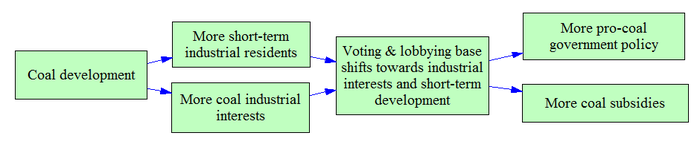
Alaska’s population consists largely of domestic immigrants. Due to Alaska’s limited voting base, the population of short-term industrial residents and of long-term residents who are attracted to Alaska because of industry-related opportunities has a significant effect on policy. This occurs both through general voting patterns, and through the relative power of small, well-organized special interest groups.
While this image is particular to coal development, this principle is broadly relevant in Alaska state politics. Whether the "special interest" in question is oil & gas development, fishing, conservation groups, or snowmobile enthusiasts, the basic dynamic is similar: the relatively small population size of the state gives small groups of well-organized people potentially greater influence. Where out-of-state entities or transient worker groups bring in heavy funding or focused agendas, they can likewise have a very strong influence.